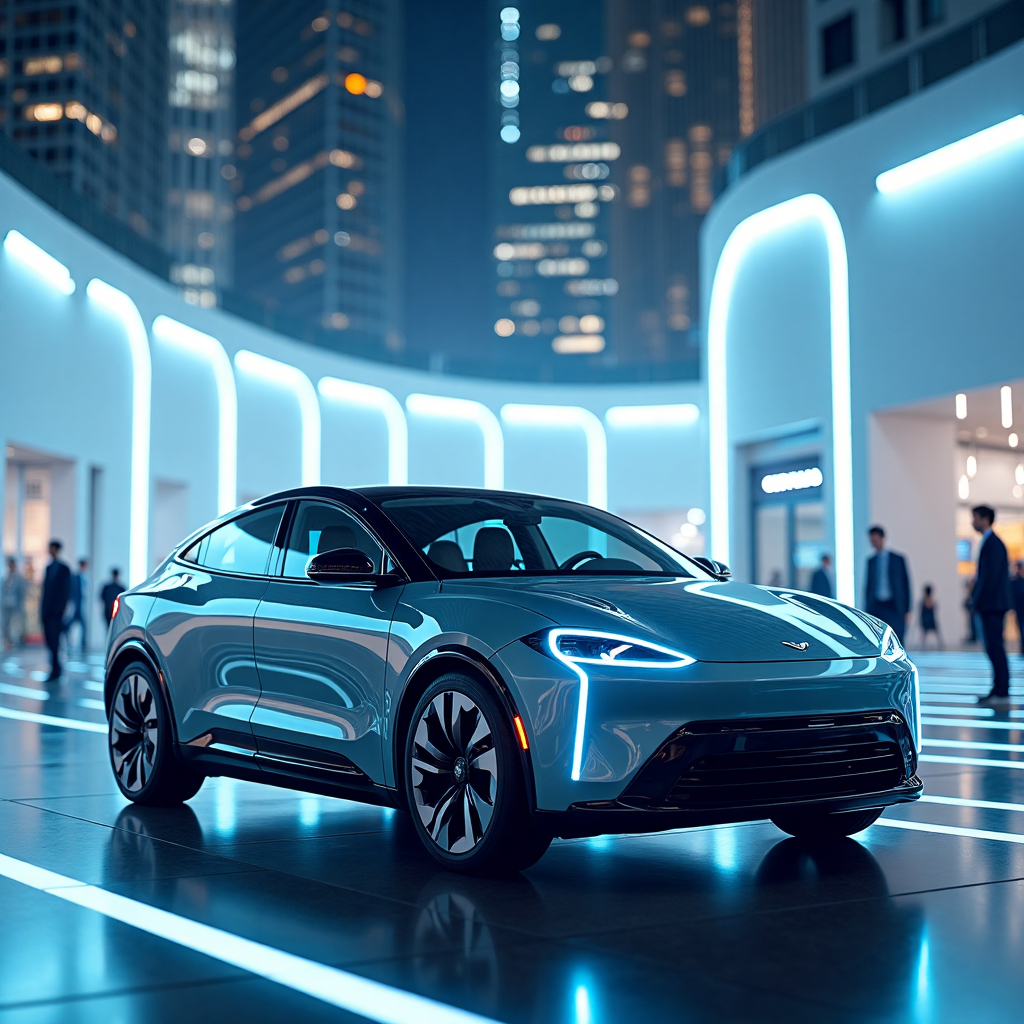
The electric vehicle (EV) industry is accelerating at a pace that would have been difficult to imagine just a decade ago. What started as a niche market for early adopters and environmental enthusiasts has transformed into a global automotive movement, with nearly every major manufacturer committing to an electrified lineup. However, the EVs we see on the road today are only the beginning. The next wave of electric vehicle technology will redefine not just how we drive, but how we interact with energy, software, and the very concept of personal mobility. From solid-state batteries and wireless charging to artificial intelligence and vehicle-to-grid integration, the future of EVs is being written in laboratories, pilot programs, and production facilities around the world.
For drivers, fleet operators, and policymakers alike, understanding these emerging trends is no longer optional. The decisions made today about charging infrastructure, battery chemistry, and software architecture will shape the automotive landscape for decades. More importantly, the convergence of electrification with digital connectivity and renewable energy is creating an entirely new ecosystem where the vehicle is not an isolated machine, but an intelligent, connected energy asset. In this article, we will explore the most significant future trends in electric vehicle technology, offering a detailed look at how they will impact performance, affordability, sustainability, and everyday life.
1. Next-Generation Battery Technologies
Battery technology remains the beating heart of the electric vehicle revolution. While lithium-ion batteries have served the industry well, they come with inherent limitations in energy density, charging speed, cost, and reliance on scarce raw materials. The next decade will see a fundamental shift in how EV batteries are designed, manufactured, and recycled. Researchers and automakers are investing heavily in chemistries that promise longer range, faster charging, improved safety, and lower environmental impact.
Solid-State Batteries: The Great Leap Forward
Among all battery innovations, solid-state technology is widely regarded as the most transformative. Unlike conventional lithium-ion cells that use a liquid electrolyte to transport ions between the anode and cathode, solid-state batteries replace that liquid with a solid electrolyte. This single change unlocks several major advantages. First, solid-state batteries can achieve significantly higher energy density, meaning an EV could travel 500 to 600 miles on a single charge without increasing pack size or weight. Second, they are inherently safer because solid electrolytes are far less flammable than liquid ones, reducing the risk of thermal runaway and battery fires.
Automakers such as Toyota, Nissan, BMW, and Volkswagen are racing to bring solid-state batteries to market. Toyota, for example, has announced plans to commercialize solid-state batteries in the second half of the 2020s, with initial applications in hybrid vehicles before scaling to full EVs. The challenges remain significant: manufacturing solid-state cells at scale is complex, and ensuring long-term durability under real-world conditions requires further refinement. Nevertheless, the potential is enormous. Once production yields improve and costs decline, solid-state batteries could eliminate range anxiety and make electric vehicles viable for virtually every use case, including long-haul trucking and heavy-duty transport.
Lithium-Sulfur and Sodium-Ion Alternatives
Beyond solid-state, other battery chemistries are emerging as viable alternatives to conventional lithium-ion. Lithium-sulfur batteries, for example, use sulfur as the cathode material, which is abundant, cheap, and environmentally benign. These batteries offer the potential for up to five times the energy density of traditional lithium-ion cells at a fraction of the cost. However, they have historically suffered from short cycle life because sulfur expands and degrades during charge and discharge cycles. Recent advances in cathode design and electrolyte additives are beginning to address these issues, and several startups are targeting niche applications such as drones and aviation before moving into automotive use.
Sodium-ion batteries are another compelling option, particularly for cost-sensitive segments like urban commuter cars and stationary energy storage. Sodium is widely available and inexpensive compared to lithium, cobalt, and nickel. While sodium-ion cells generally offer lower energy density than lithium-ion, they perform well in cold temperatures and can be charged quickly without the same level of thermal management complexity. Chinese battery giant CATL has already begun producing sodium-ion batteries, and several automakers are evaluating them for smaller, affordable EVs. As global lithium supplies face geopolitical and environmental pressures, sodium-ion could become a critical part of the battery mix.
2. Ultra-Fast Charging and Wireless Charging Infrastructure
Even the best battery is only as useful as the infrastructure that supports it. One of the most persistent barriers to EV adoption has been charging time and convenience. While home charging satisfies most daily needs, long trips require dependable fast-charging networks. Future trends point toward charging solutions that are faster, smarter, and increasingly seamless.
800-Volt Architecture and Megawatt Charging
Many current EVs operate on 400-volt electrical architectures, which limit charging speeds to around 250 kW in the best cases. The shift to 800-volt architecture, pioneered by vehicles like the Porsche Taycan and Hyundai Ioniq 5, allows for significantly faster charging because higher voltage reduces current for the same power level, which in turn reduces heat and enables more efficient energy transfer. With 800-volt systems, charging from 10 to 80 percent can take as little as 18 minutes on compatible ultra-fast chargers. In the near future, 800 volts will become the standard for premium and mass-market EVs alike, enabling charging stops that approach the refueling time of gasoline vehicles.
For heavy-duty electric trucks, the industry is developing megawatt charging systems capable of delivering one megawatt or more of power. These chargers will allow commercial vehicles with massive battery packs to recharge during mandatory driver rest periods, making long-haul electric trucking practical. Standards such as the Megawatt Charging System are being finalized, and pilot installations are already underway in Europe and North America.
Wireless Inductive Charging
Wireless charging for electric vehicles is moving from concept to commercial reality. Inductive charging uses magnetic resonance between a pad on the ground and a receiver on the vehicle to transfer energy without physical cables. For EV owners, this means simply parking over a charging pad at home, in a parking garage, or at a traffic light to replenish the battery. While current wireless systems operate at lower power levels than wired fast chargers, they offer unmatched convenience for daily use and are especially valuable for autonomous vehicles that cannot plug themselves in.
Several automakers and technology companies are testing wireless charging systems with power levels of 11 kW to 22 kW, suitable for overnight home charging. In the future, dynamic wireless charging embedded in roadways could allow EVs to charge while driving, effectively eliminating range limitations on highways and urban corridors. Pilot projects in Sweden, Israel, and Italy have demonstrated the feasibility of dynamic inductive charging, though the cost and complexity of road installation remain significant hurdles.
3. Vehicle-to-Grid and Bidirectional Energy Integration
Electric vehicles are poised to become more than just consumers of electricity. With bidirectional charging technology, EVs can also supply power back to the grid, to a home, or to other devices. This capability transforms a parked EV into a mobile energy storage unit, with profound implications for grid resilience, renewable energy integration, and personal energy independence.
How Vehicle-to-Grid Works
Vehicle-to-grid technology allows an EV’s battery to communicate with the electric grid and discharge energy during periods of high demand or high electricity prices. When demand is low and renewable generation is abundant, the vehicle charges. When demand peaks, the vehicle can sell stored energy back to the utility or reduce its charging rate automatically. For EV owners, this creates an opportunity to earn money or offset charging costs simply by plugging in when not driving. For utilities, V2G provides a distributed network of energy storage that can help balance the variability of solar and wind power.
Automakers such as Ford, Nissan, and Hyundai are already offering vehicles with bidirectional charging capability. The Ford F-150 Lightning, for example, can power a home for up to three days during an outage using its extended-range battery. In Japan, Nissan has piloted V2G programs demonstrating that Leaf owners can reduce annual electricity bills by using their cars as grid assets. As smart grid infrastructure matures and utility regulations evolve, V2G is expected to become a standard feature in future EVs.
Home Energy Ecosystems and Microgrids
Beyond the grid, bidirectional EVs are enabling new home energy ecosystems. An EV can pair with rooftop solar panels and a home battery to create a personal microgrid, storing excess solar energy during the day and using it to power the home at night. The vehicle becomes an extension of the home’s energy system, providing backup power during blackouts and reducing reliance on the utility. Companies like Tesla, Enphase, and Schneider Electric are developing integrated platforms that allow homeowners to manage solar generation, stationary storage, and EV charging from a single app.
This integration is particularly valuable as extreme weather events become more frequent due to climate change. An EV with sufficient battery capacity can keep essential appliances running for days, offering a level of resilience that traditional gasoline vehicles cannot match. In the future, entire neighborhoods could form virtual power plants by aggregating thousands of EV batteries, providing grid services and reducing the need for fossil fuel peaker plants.
4. Software-Defined Vehicles and Over-the-Air Updates
The electric vehicle is increasingly a software product on wheels. Unlike traditional cars whose capabilities are fixed at the time of manufacture, software-defined vehicles can be updated, improved, and personalized throughout their lifetime. This shift is as fundamental as the transition from internal combustion engines to electric motors, and it is changing the economics of the automotive industry.
The Rise of Centralized Computing Platforms
Legacy vehicles rely on dozens of separate electronic control units, each responsible for a single function such as braking, infotainment, or climate control. Software-defined EVs are moving toward centralized computing architectures, where a small number of powerful processors manage multiple vehicle systems. This consolidation reduces wiring complexity, lowers weight, and enables more sophisticated software features. Tesla pioneered this approach with its custom-designed computing platform, and other automakers are following suit with high-performance chips from companies like Nvidia, Qualcomm, and Mobileye.
Centralized computing enables real-time data processing from cameras, radar, lidar, and other sensors, allowing advanced driver assistance systems to respond faster and more intelligently. It also allows hardware and software development cycles to be decoupled, meaning new features can be delivered without waiting for a new model year. This agility is essential in a market where consumers increasingly expect their vehicles to improve over time, just like their smartphones.
Over-the-Air Updates and Feature Monetization
Over-the-air updates allow manufacturers to remotely deliver new software, fix bugs, and even unlock new vehicle capabilities. Tesla has used OTA updates to improve braking distances, add battery preconditioning, and introduce entertainment features without requiring a service visit. Other automakers, including Rivian, Lucid, and Polestar, are building similar capabilities into their vehicles. In the future, drivers can expect to purchase performance upgrades, range unlocks, or advanced autonomous features through software subscriptions, creating a new recurring revenue stream for manufacturers.
This software-driven model also raises important questions about ownership and data privacy. If a vehicle’s features can be changed remotely, who controls the car? How is driver data protected? These questions will shape regulations and consumer expectations in the coming years. Nonetheless, software-defined vehicles are clearly the future, and EVs are the natural platform for this transformation because their simpler mechanical design makes them easier to integrate with digital systems.
5. Artificial Intelligence and Autonomous Driving Integration
Electric vehicles and autonomous driving are converging. The precision, responsiveness, and data-rich nature of electric powertrains make them ideal partners for AI-driven autonomy. While fully self-driving cars are still years away from widespread deployment, the building blocks are being integrated into EVs at an accelerating rate.
From Advanced Driver Assistance to Full Autonomy
Modern EVs are equipped with advanced driver assistance systems that can handle acceleration, braking, lane keeping, and parking under certain conditions. These systems rely on AI algorithms trained on millions of miles of driving data. As computational power increases and sensor technology improves, these capabilities will expand from Level 2 assistance to Level 3 conditional autonomy, where the vehicle can manage most driving tasks on highways without constant driver supervision.
Level 4 autonomy, in which the vehicle can operate without a human driver in designated areas, is already being tested in robotaxi fleets from companies like Waymo, Cruise, and Baidu. Many of these autonomous vehicles are electric because electric powertrains offer precise torque control, lower operating costs, and easier integration with drive-by-wire systems. In the future, electric autonomous shuttles and delivery vehicles could transform urban logistics, reducing traffic congestion and emissions while improving mobility for elderly and disabled populations.
AI Optimized Energy Management
AI is not only driving autonomy but also optimizing energy consumption. Intelligent energy management systems use machine learning to predict driving routes, traffic patterns, and weather conditions, then adjust powertrain settings, regenerative braking, and climate control to maximize range. For example, an AI system might learn that a driver commutes on hilly terrain at a specific time each day and automatically pre-condition the battery and cabin temperature while the vehicle is still plugged in, preserving battery charge for the journey.
Fleet operators can use AI to optimize charging schedules across hundreds of vehicles, ensuring that all vehicles are ready for their routes while minimizing electricity costs and avoiding grid overload. As EV adoption scales, these AI-driven efficiencies will become essential for managing the energy demands of millions of vehicles.
6. Sustainable Materials and Circular Manufacturing
The environmental benefits of electric vehicles extend beyond tailpipe emissions, but only if the entire lifecycle is managed sustainably. The industry is increasingly focused on reducing the carbon footprint of battery production, using recycled materials, and designing vehicles for circularity. Future EV technologies will place sustainability at the core of design and manufacturing processes.
Recycling and Second-Life Batteries
EV batteries contain valuable materials such as lithium, nickel, cobalt, and manganese. As the first generation of EVs reaches the end of its useful life, recycling capacity is expanding rapidly. New recycling processes can recover up to 95 percent of these critical minerals, reducing the need for new mining and lowering the carbon footprint of battery production. Companies like Redwood Materials, Li-Cycle, and Northvolt are building large-scale recycling facilities, and automakers are partnering with them to create closed-loop supply chains.
Before recycling, many used EV batteries can serve a second life in stationary energy storage applications. A battery with 70 percent of its original capacity may no longer be ideal for a vehicle but can still store solar energy for years. Second-life batteries are being used in grid storage projects, commercial buildings, and even off-grid communities. This cascading use extends the value of the battery and reduces overall environmental impact.
Low-Carbon and Bio-Based Materials
Beyond batteries, EV manufacturers are exploring sustainable materials for the vehicle body, interior, and components. Recycled aluminum, bio-based plastics, and natural fibers such as flax, hemp, and kenaf are being used in seats, dashboards, and door panels. These materials reduce the vehicle’s carbon footprint and appeal to environmentally conscious consumers. For example, BMW’s i Vision Circular concept uses 100 percent recycled materials and is designed to be fully disassembled at the end of its life. Volvo and Polestar have committed to using recycled and bio-based materials in their future EV lineups.
Circular manufacturing principles are also gaining traction. Automakers are designing vehicles with fewer parts, modular assemblies, and easily replaceable components to extend product life and simplify recycling. In the future, an EV might be assembled in a modular fashion, with the battery, motor, and body components designed to be upgraded, repaired, or replaced independently, reducing waste and lowering the total cost of ownership.
7. Advanced Electric Motors and Powertrain Efficiency
While batteries dominate the conversation, electric motors are also undergoing significant innovation. Future EV motors will be smaller, lighter, more powerful, and more efficient, contributing to longer range and better performance without requiring larger batteries.
Axial Flux and In-Wheel Motors
Traditional radial flux motors have a cylindrical shape with the magnetic flux running radially. Axial flux motors, by contrast, are flatter and have the flux running parallel to the axis of rotation. This design offers higher torque density and efficiency in a smaller, lighter package. Companies like YASA, a subsidiary of Mercedes-Benz, are developing axial flux motors for high-performance EVs, and the technology is expected to spread to mainstream vehicles as production costs decline.
In-wheel motors place the electric motor directly inside the wheel hub, eliminating the need for driveshafts, differentials, and other transmission components. This frees up space for more batteries or passenger room and allows for independent torque control at each wheel, improving traction, handling, and maneuverability. Companies like Protean Electric and Elaphe are developing in-wheel motor systems, and several electric supercars and concept vehicles have demonstrated their potential. While challenges remain in terms of unsprung weight and durability, in-wheel motors could become a viable option for urban EVs and autonomous shuttles in the coming decade.
Silicon Carbide Inverters and High-Efficiency Powertrains
The inverter is a critical component that converts DC power from the battery to AC power for the motor. Traditionally, inverters use silicon-based semiconductors, which have inherent efficiency losses and generate heat. Silicon carbide semiconductors can operate at higher temperatures, voltages, and switching frequencies with much lower losses. This improves overall powertrain efficiency by 5 to 10 percent, translating directly into longer range or smaller batteries. Tesla, BYD, and other manufacturers are already using silicon carbide inverters, and the technology is becoming standard in premium EVs. As production capacity expands, costs will fall, making high-efficiency powertrains accessible across all price segments.
8. Solar Integration and Renewable Energy Synergy
Electric vehicles are only as clean as the electricity that powers them. As the world transitions to renewable energy, the synergy between EVs and solar power will deepen. Some automakers are even integrating solar cells directly into vehicles, allowing them to generate a portion of their own energy.
Vehicle-Integrated Photovoltaics
Vehicle-integrated photovoltaics embed solar cells into the roof, hood, and even side panels of an EV. While solar cells on a car cannot fully charge the battery in most conditions, they can add meaningful range over time. A vehicle with a solar roof can generate enough energy to cover several miles of driving per day under optimal conditions, which is sufficient for some urban commuters and can offset parasitic loads such as climate control. The Lightyear 0 and Sono Sion are examples of solar-assisted EVs that reached production or advanced prototype stages, though both companies faced financial challenges. As solar cell efficiency improves and costs decline, VIPV could become a standard feature, especially in sun-rich regions.
Smart Charging with Renewable Energy
Future EVs will increasingly charge with renewable energy through smart charging platforms. These systems automatically schedule charging when renewable generation is highest and electricity prices are lowest. For example, an EV owner with rooftop solar can set the car to charge only when the sun is shining, maximizing the use of self-generated clean energy. On a larger scale, utilities can send signals to EVs to pause charging during periods of high grid stress and resume when renewable supply is abundant. This not only reduces emissions but also lowers costs for both the utility and the consumer. As renewable energy becomes the dominant source of electricity, the ability of EVs to act as flexible loads and storage assets will be crucial for grid stability.
Conclusion: The Electric Vehicle as an Intelligent Energy Platform
The future of electric vehicle technology extends far beyond replacing the internal combustion engine with a battery and motor. The EV of tomorrow will be a solid-state-powered, software-defined, wirelessly connected energy platform that communicates with the grid, learns from its driver, and continuously improves over time. It will be built from sustainable materials, powered by renewable energy, and capable of earning money for its owner through vehicle-to-grid services. In short, the electric vehicle is evolving from a mode of transportation into a fundamental building block of a cleaner, smarter, and more resilient energy system.
For consumers, these trends promise greater range, faster charging, lower costs, and a more personalized driving experience. For society, they offer a pathway to decarbonize transportation and integrate renewable energy at scale. The transition will not happen overnight, and significant challenges remain in battery manufacturing, charging infrastructure, regulatory frameworks, and consumer acceptance. However, the direction is unmistakable. The technologies being developed today will define the next decade of mobility and energy, and those who embrace them early will be best positioned to thrive in the electric future.
As someone who has spent years writing about the automotive industry, I have seen bold predictions come and go. But the pace of innovation in electric vehicle technology is unlike anything the industry has experienced. The convergence of battery science, artificial intelligence, renewable energy, and digital connectivity is creating a new paradigm that will reshape not only how we drive, but how we live. The road ahead is electric, intelligent, and full of possibility.